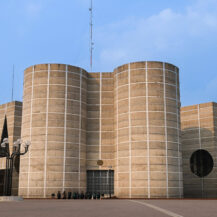
Bangladesh Developed Under Democracy: The Opportunity Has Returned
By
As Bangladesh approaches the return of the first genuinely elected government after 2009, the opportunity has arisen to resume its remarkable development trajectory. Using the word “remarkable” may come as a surprise to the younger generation in particular, who saw nothing remarkable about the past decade of autocratic rule. While that perspective is correct, they should be made aware of the noteworthy progress Bangladesh has made since independence, most of it during the four terms of elected governments. These achievements were recognized globally when Bangladesh received the “UN Millennium Development Goals Award of 2010” and, in 2013, the FAO’s “outstanding progress in fighting hunger” award.
This article will make three points. First, much has been achieved against extraordinary odds, mostly under elected governments. Second, these achievements were endangered when fair elections – the first requirement of a democracy – were abandoned in 2014. Unfortunately, after 18 months of tumultuous transition, the economy remains in a precarious position, facing numerous challenges.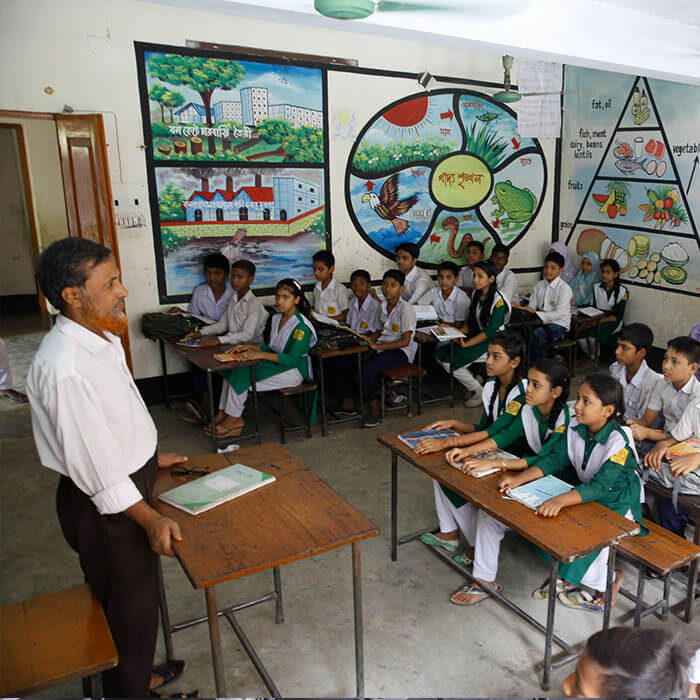
Third, the restoration of a democratically elected government provides renewed prospects of reinvigorating development. It sketches out seven specific agenda items that the new government will need to address to achieve that: (i) meeting the employment crisis through a productive works program; (ii) focused investment and trade policies that will meet the LDC graduation challenge and employ millions by making the economy competitive and boosting labor-intensive diversified exports; (iii) solving the ongoing energy/gas crisis and implementing a medium term plan to provide energy and power sustainably; (iv) raising revenues to provide much needed public services while increasing expenditure effectiveness; (v) deepening financial sector reforms; and (vi) policy- institutional reforms and investments in education and health to build up human capital.
In conclusion, we discuss the seventh point, governance: specifically, the urgent need to restore order and normalcy in people’s lives; and second, to ensure that the best-qualified people are appointed to key positions, and expertise and stakeholders are consulted so that implementation can proceed. In this discussion, we will set aside important but medium-term structural issues such as urbanisation, decentralisation, the environment, and climate change, and focus instead on the immediate agenda.
The appointment of a good economics team will be all-important. Overall, the country needs a clear vision and the implementation of bold policy reforms, similar to those achieved by the first BNP parliamentary elected government from 1991 to 1996. So, the new BNP government has a proud legacy to follow.
The appointment of a good economics team will be all-important. Overall, the country needs a clear vision and the implementation of bold policy reforms, similar to those achieved by the first BNP parliamentary elected government from 1991 to 1996. So, the new BNP government has a proud legacy to follow.
Remarkable Development Journey
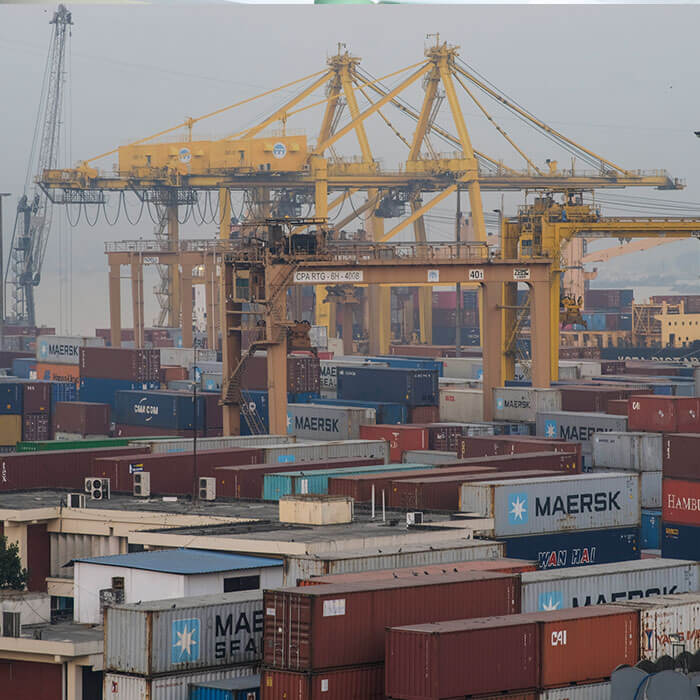
In his magisterial 2010 book “On China,” Kissinger suggested that Vietnam and Bangladesh would inherit labor-intensive manufacturing from China as wages there became too expensive. In the event, Vietnam has forcefully utilized that opportunity over the 15 years since then. Bangladesh has also emerged as a ready-made garments manufacturing powerhouse, gaining much of the global RMG market share China lost. However, unlike Vietnam, it has been unable to diversify and grow its exports as fast, primarily due to policy failures over the past decade.
What made Kissinger identify Bangladesh as a possible candidate to succeed China? Clearly, Bangladesh is not in the same group as the East Asian “miracle growth” countries. However, in South Asia, Bangladesh’s development path aligns most closely with that of East Asia. Bangladesh’s growth has been driven by labor-intensive, export-oriented ready-made garment manufacturing and rapid increases in agricultural yields and production supported by investments in agriculture and rural development. Lastly, public expenditures in health and education developed human capital, albeit modestly.
Under this strategy, real per capita incomes increased by five times, while food production quadrupled, thereby banishing the specter of famine. Malnutrition, stunting, and infant mortality all declined. Side by side, literacy and school enrollment increased by leaps and bounds. As the economy transformed, the urban population grew 10-fold; Bangladesh became a manufacturing and industrial hub producing a variety of products, and the share of agriculture, fisheries and forestry in GDP fell from nearly 60% to about 11%.
Thus, despite being a resource-poor country, Bangladesh achieved these milestones to become a “front runner” in meeting the Millennium Development Goals ahead of the 2015 target year, particularly in poverty reduction, gender parity in education, reductions in maternal and child mortality, and health and disease control. As a result of this performance, Bangladesh was awarded the “UN MDG Award 2010” and recognized by the FAO for “outstanding progress in fighting hunger” in 2013. 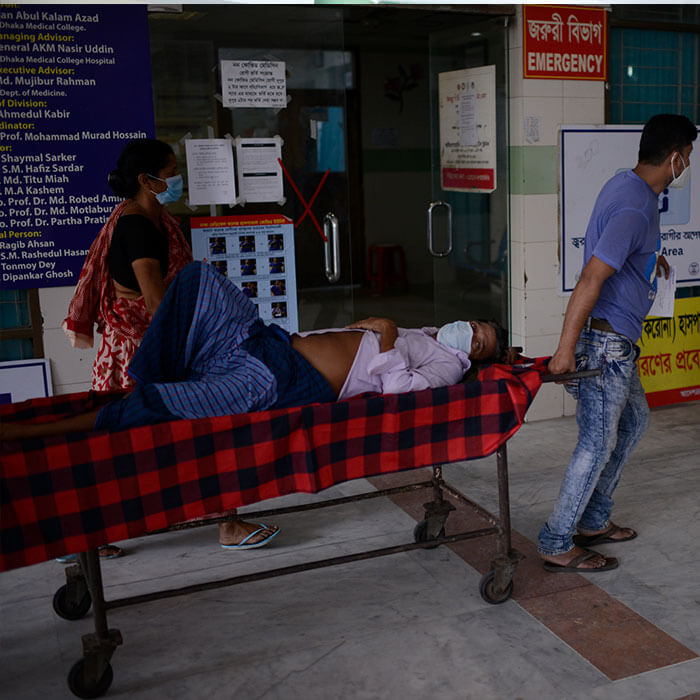
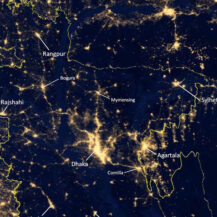
Some figures can highlight these achievements. Figure 1 shows the rise in per capita income, measured in comparable thousand international (PPP) dollars at constant 2021 prices. In 1990, Bangladesh was the poorest country, and Pakistan was significantly richer. Around 2011, Bangladesh’s per capita income surpassed Pakistan’s and began to approach India’s. As of 2024, Bangladesh’s per capita income was 54% higher than Pakistan’s and only 16% less than India’s. There is controversy surrounding the quality of GDP data for all these countries. However, the rapid rise in nightlight density from data collected by US satellites – a well-established correlate of GDP – clearly supports robust per capita GDP growth in Bangladesh. Nightlight density has increased more than fivefold over the past 30 years. It also grew at 16% per annum between 2009 and 2019, corresponding to a GDP growth rate of 5% p.a.
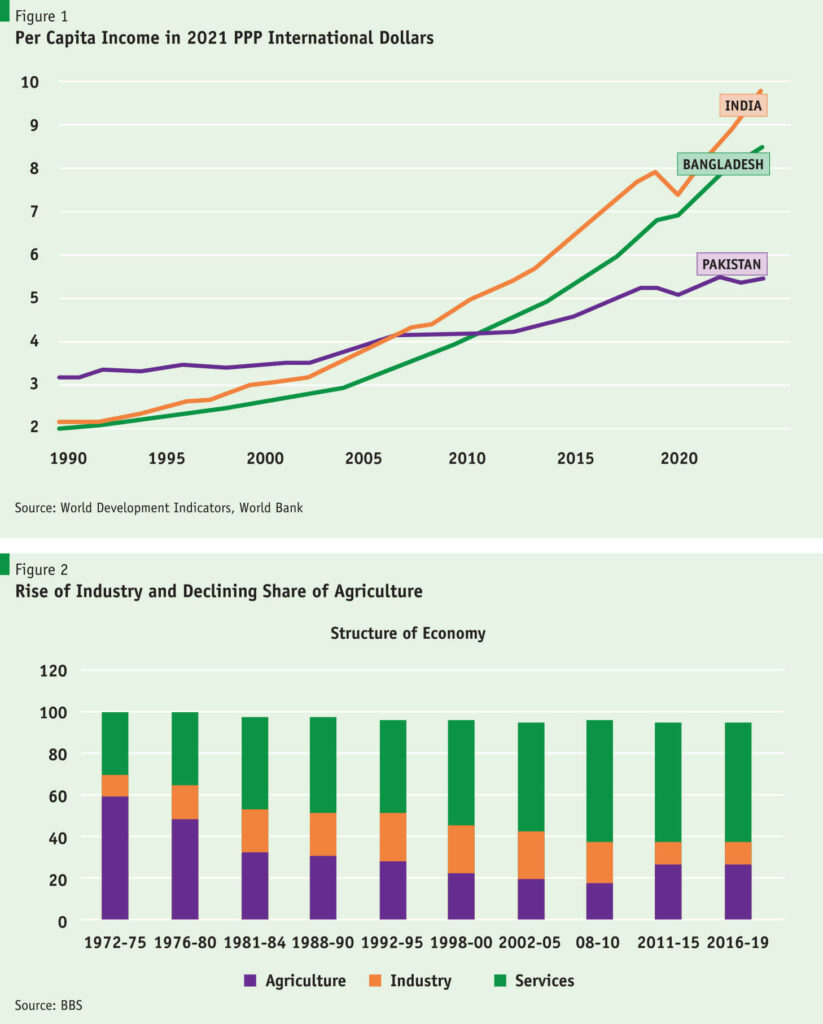
Growth was accompanied by significant structural transformation: the share of agriculture, fisheries, and forestry declined from 60% to about 11% of GDP by 2019, while the share of industry increased from 9% to 23%, with the remainder going to services.
The rise in incomes and structural transformation led to a marked decline in poverty. The upper poverty line (monthly expenditures of Tk. 15,328 for a family of four) poverty rate fell from 60% in 1985 to 18% in 2022, while the extreme poverty rate (monthly expenditures of Tk. 11,000 a month for a family of four) declined from 40% to 6% over the same period. Worth noting in Table 1 is that in 2022, Bangladesh’s poverty rate had declined to nearly the same level as India’s and was markedly lower than Pakistan’s 16% poverty rate (in 2018). 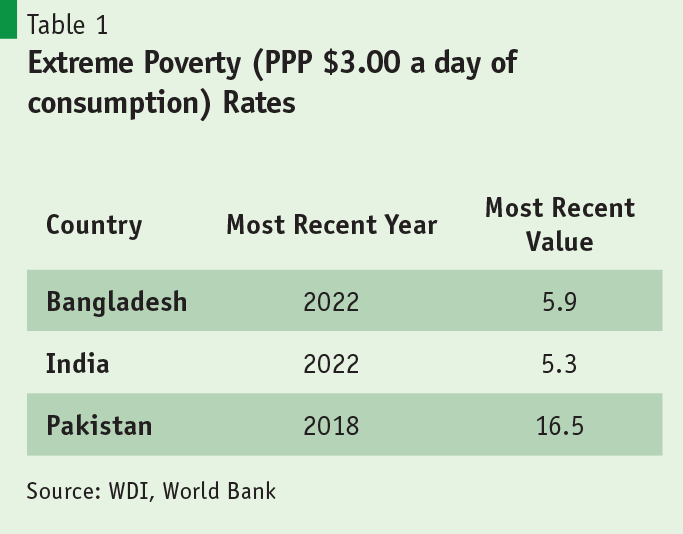
Finally, the most remarkable progress has been in health indicators, perhaps best summarized by Bangladesh’s life expectancy of 75 years, compared with 72 years in India and 68 years in Pakistan.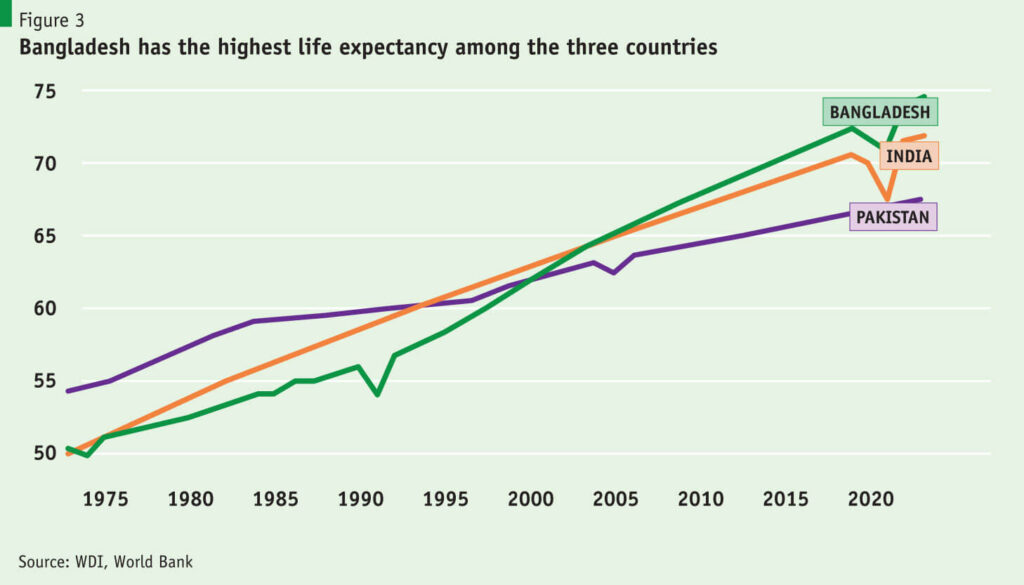
Most Progress Happened Under Democracy
Most of Bangladesh’s achievements have occurred under democratically elected governments. Excluding the years after 2014 and the 2007-08 interim Government years, three-fourths of Bangladesh’s economic growth occurred during the 20 years of parliamentary elections from 1991 to 2014.
The modern Bangladesh economy was launched mainly under the auspices of the first parliamentary Government of 1991, guided by Prime Minister Khaleda Zia and a visionary Finance Minister, Saifur Rahman. The government firmly set the course for a private-sector-led market economy by deregulation, accelerated privatization, and fiscal and financial reforms. The introduction of VAT reduced distortions, doubled revenue, and produced the government’s first Taka surplus. The increased budgetary space enabled health and education expenditures to double over the 1990s. Then, successive Awami League and BNP governments invested in rural infrastructure, health and education, and, later, in transport and power infrastructure.
Excluding the years after 2014 and the 2007-08 interim Government years, three-fourths of Bangladesh’s economic growth occurred during the 20 years of parliamentary elections from 1991 to 2014.
The modern Bangladesh economy was launched mainly under the auspices of the first parliamentary Government of 1991, guided by Prime Minister Khaleda Zia and a visionary Finance Minister, Saifur Rahman.
Furthermore, reductions in tariffs and quantitative restrictions on imports lowered anti-export bias and made the economy export-oriented. Export earnings increased sharply, rising by 11-12 percent per annum over the next two decades under democratic rule. Moreover, liberalizing imports of shallow tubewells during this period boosted Boro yields and, unexpectedly, revolutionized rural transport, as their diesel engines were also used to power riverboats. Economic performance during the second term of the Awami League, from 2009 to 2014, demonstrated several advances. For instance, revenue collection rates increased by nearly 2 percentage points to 11.2% of GDP from FY 2009 to FY 2013; inflation remained contained, while power production increased sharply.
The Betrayal of Democracy and Economic Decline
The economy grew under four terms of elected governments, spurred by a healthy “development competition” between the two leading parties. Conversely, the roots of economic decline emerged with the collapse of democratic rule in 2014. Once the AL government started rigging elections from 2014 onwards, it lost its sense of accountability and instead acquired a sense of impunity. That led to reckless economic management under which crony capitalism expanded, financed by billions of takas in bank loans that cronies did not need to repay. Non-competitive, favored power-sector contracts guaranteed payment for installed capacity, some at exorbitant prices. Uncoordinated development of nearly 40% excess power capacity, coupled with the absence of economically viable energy sources, led to the power sector’s massive bankruptcy. Excess payments to contractors on mega projects that lacked economic justification, such as the Payra port, the railway bridge across the Padma, and the Karnaphuli tunnel, not only wasted money but also imposed significant future liabilities on the economy. 
Underlying all this was the failure of macroeconomic policy, driven by pegging the Taka to the dollar and by a real exchange rate appreciation of more than 50%. That led to a decline in export competitiveness and a fall in the economy’s export share from 20 percent of GDP in 2012 to 11 percent 12 years later. In comparison, India and Vietnam now have export-to-GDP ratios of 22% and 94%, respectively.
Problems of external management were compounded by declining revenue collection rates from 11.2% to 8.3% of GDP, while expanding expenditures, especially on mega projects, led to burgeoning deficits and borrowing. Worst was the monetization of the deficit, as the government increasingly relied on central bank financing. Inflation increased, and interest payments rose sharply, crowding out fiscal space for critical public services.
When the energy price increase shock occurred in 2022 due to the war in Ukraine, macroeconomic mismanagement deepened. The government mistakenly sought to protect the exchange rate while maintaining interest rates fixed at an irrational 6-9 percent (the deposit-lending rate), causing external reserves to drop by half. However, that was still insufficient to prevent a 45% depreciation of the exchange rate, which fueled inflationary pressures to double digits. These developments, combined with a lack of confidence in the exchange rate’s defensibility, led to massive capital flight.
These precarious macroeconomic conditions and high unemployment among educated youth proved a combustible mix. When an employment-quota policy that reserved more than 50% of government jobs for the grandchildren of freedom fighters was renewed, depriving other meritorious students, widespread protests erupted. The government’s attempt to violently suppress them only broadened and inflamed the movement, leading to an overthrow of the government.
The Interim Government Period
Following the collapse of the previous government, Prof. Yunus headed the interim government that made partial but essential progress on two fronts: stabilizing the economy, especially external balances, exchange rates, rebuilding foreign exchange reserves and, second, addressing the Banking Sector crisis.
But revenue growth sharply slowed in the last eighteen months. Because expenditures, especially in the ADP, fell even more, fiscal deficits declined. Deficits, however, have been financed mainly through domestic bank borrowing, crowding out private financing. Lastly, the picture remains mixed because after declining from double-digit levels, inflation remains sticky at around 9%. A combination of slow growth, supply-side constraints, and the delayed pass-through of currency depreciation has contributed to continued inflation.
Bangladesh Bank’s independence and capacity to pursue a tight monetary policy and resolve the non-performing loan crisis will be key to maintaining economic stability. A tight monetary policy, with the policy rate at 10%, a correct reclassification of loans that has revealed that one-third of all loans are non-performing, and commercial bank financing of government deficits has left little room for private-sector funding activity.
Finally, amid prevailing political instability and uncertainty, investment rates declined, growth rates in leading sectors fell sharply, and more than 2 million workers left their jobs in manufacturing and services.
Challenges for the New Government
(A) Falling Employment and Rising Poverty
Thus, the overarching challenge for the next government is to address the sharp decline in employment, the fall in real wages, and the accompanying unprecedented rise in poverty over the past two years.
…the overarching challenge for the next government is to address the sharp decline in employment, the fall in real wages, and the accompanying unprecedented rise in poverty over the past two years.
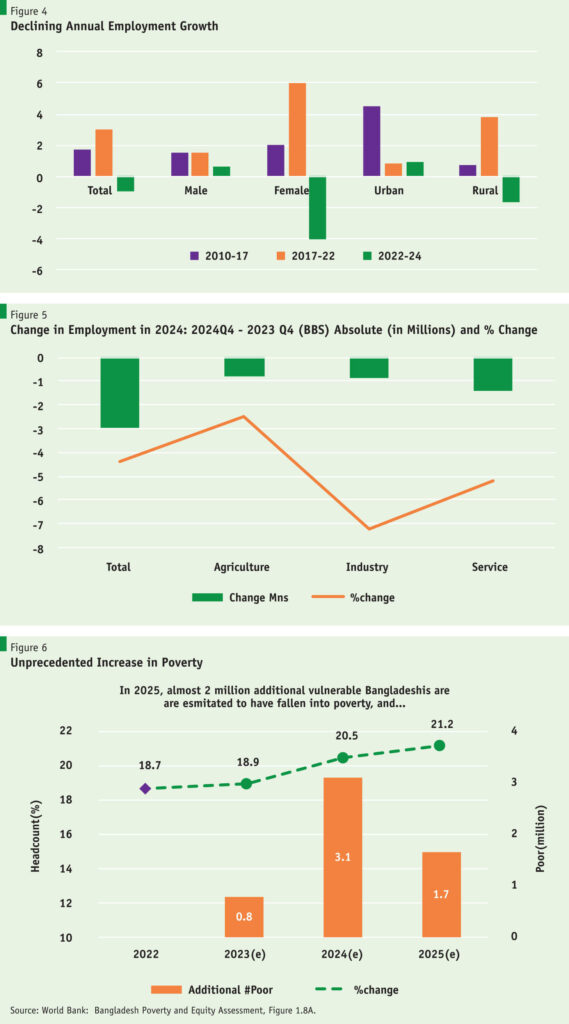
As Figures 4 and 5 show, Bangladesh has been experiencing declining employment growth rates since 2017. The decline has been particularly significant in urban areas and in manufacturing. Urban employment growth fell to 0.8% between 2017 and 2022, down from 4% between 2010 and 2017. However, the decline in employment in 2024 has been more pronounced. According to the BBS’s use of the ILO’s ICSL 13 definition, Figure 4 shows that approximately 3 million people left the workforce in 2024, of whom 1 million were from manufacturing (Figure 5).
Consistent with this picture, real wages have been falling since August 2022. The combination of falling employment and declining real wages has meant that 4.8 million Bangladeshis have been pushed into poverty in 2024 and 2025 (Figure 6). Unprecedentedly, the upper-line poverty rate has risen to 21.2%.
(B) Declining Growth, Investment and Exports.
Underlying these dismal trends in employment and poverty is the marked decline in growth rates and the subsequent stagnation in investment rates from 2024 onward (Figure 7A). Overall GDP growth has fallen from an average of 6% over 14 years (2006-2019) to 4% in fiscal 2024 and 2025. In 2025, growth rates dipped below 3% in the last quarter before recovering in the next quarter 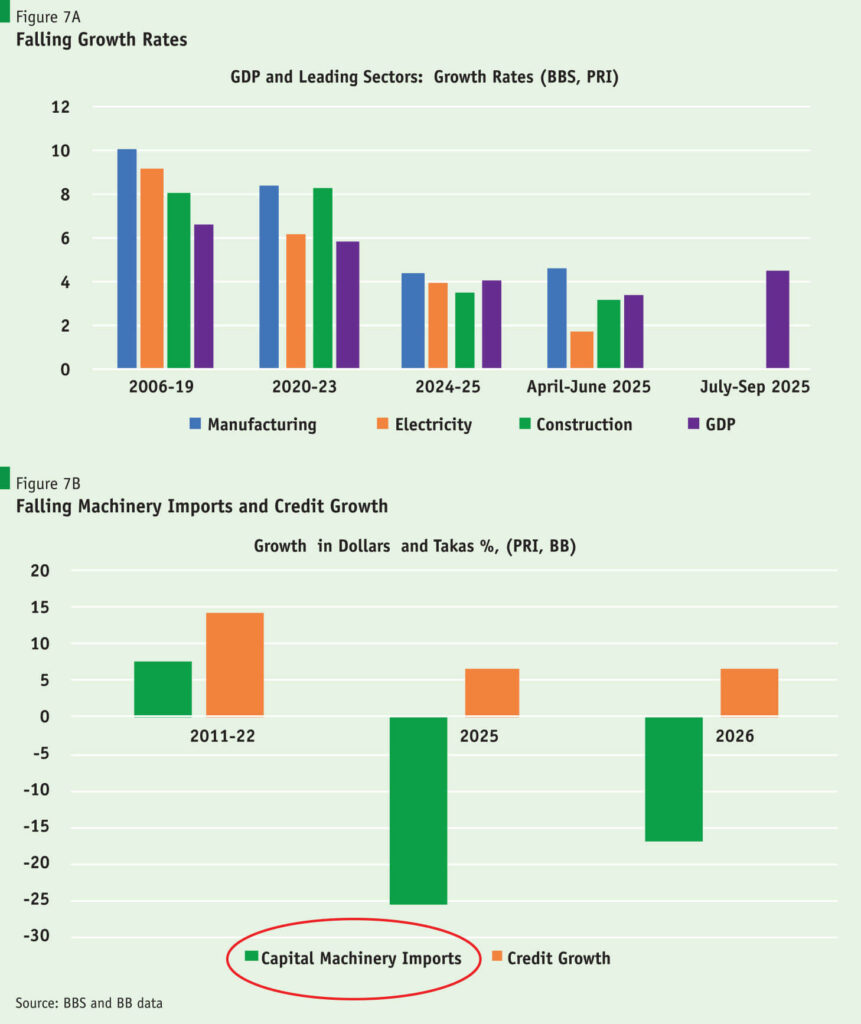
Declining growth rates have been particularly marked in the dynamic sectors of manufacturing and construction. Because construction accounts for 73% of investment in Bangladesh’s income accounts, its slowdown indicates that investment is stalling or even declining. Figure 7B supports this conjecture and shows a dramatic decrease in machinery imports in fiscal 2025 and the first quarter of fiscal 2026, compared with the average annual growth rate of 9% over the 12 years from 2011-22.
The picture of a dormant economy is also confirmed by the sharp slowdown in private-sector credit growth in 2025 and the first quarter of 2026. Compared with an average annual credit growth of 15% from 2011 to 2022, private-sector credit growth has slumped to 6%, implying a real-terms decline.
(C) Declining External Competitiveness
These final data points indicate the economy’s precarious state, as evidenced by the marked decline in Bangladesh’s exports (Figure 8A). It is worth noting that the decline in exports has been a long-term trend, indicating structural weakness and reduced external competitiveness. Whereas export growth averaged 12% or higher from 2006 to 2019 (i.e., before COVID), the growth rate slowed to 5% or less between 2020 and 2023. 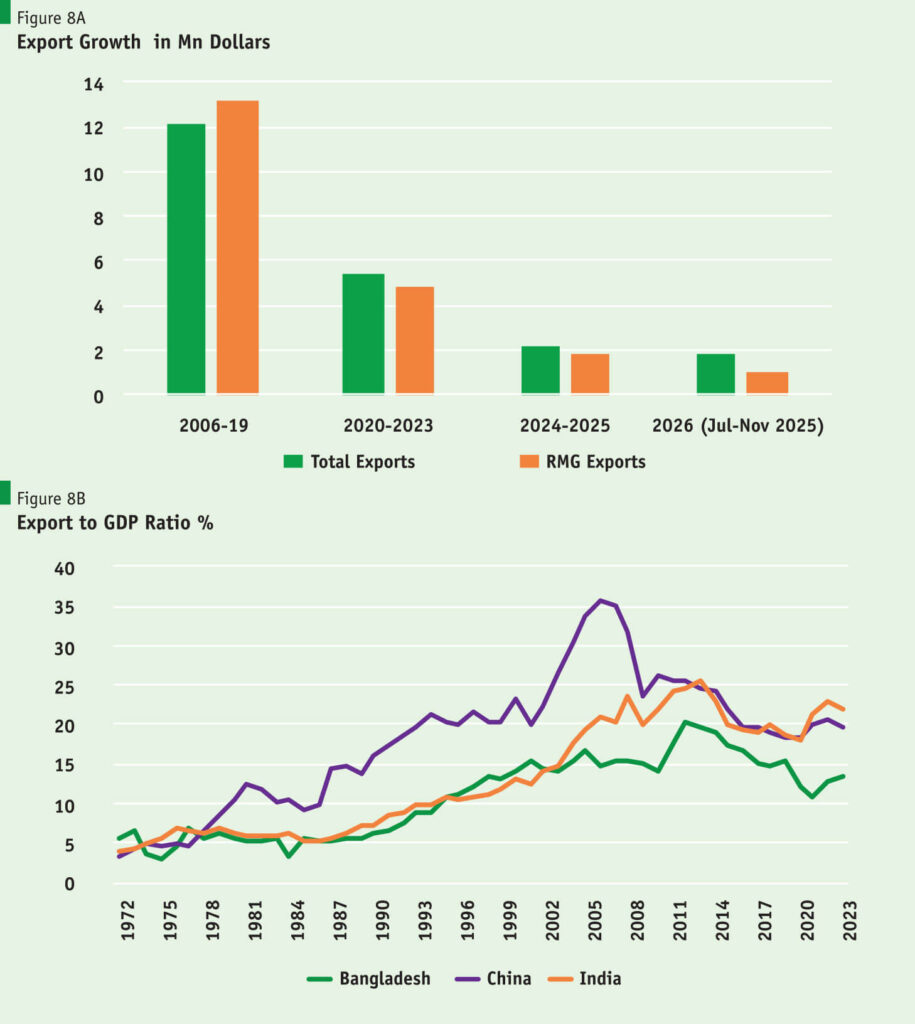
Structural weaknesses have led to a decline in Bangladesh’s economic competitiveness, as is darkly evident in Figure 8B. In Bangladesh, the export-to-GDP ratio declined from 20% in 2011 to 13% in 2023. It is also disturbing that Bangladesh’s export-to-GDP ratio is much lower than the 20 per cent-plus export-to-GDP ratios of China and India, which are much larger economies.
Structural weaknesses have led to a decline in Bangladesh’s economic competitiveness, as is darkly evident in Figure 8B. In Bangladesh, the export-to-GDP ratio declined from 20% in 2011 to 13% in 2023. It is also disturbing that Bangladesh’s export-to-GDP ratio is much lower than the 20 per cent-plus export-to-GDP ratios of China and India, which are much larger economies.
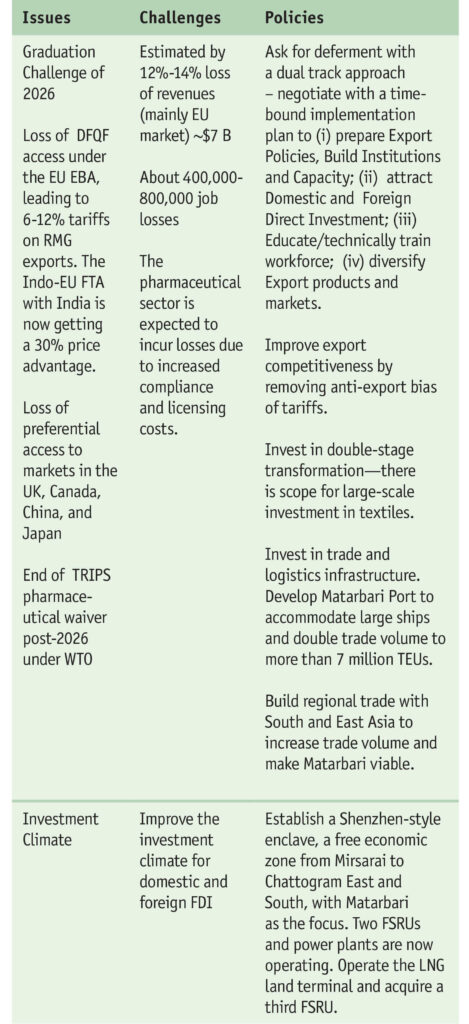
However, these structural weaknesses aside, the dramatic slump in export growth in fiscal 2024 and 2025, and in the first five months of fiscal 2026, is especially worrying and poses an immediate challenge to the Bangladesh economy’s recovery. That is especially true, given that Bangladesh will be graduating from the least-developed country category to a developing economy under the UN classification. In doing so, Bangladesh will stand to lose trade-related tariff and quota preferences in Europe, Japan, and other advanced economies worldwide.
What is To Be Done? Priorities for the Next Government.
In 2026, the newly elected BNP government will inherit a bounty of challenges. If they are met forcefully, Bangladesh can return to its trajectory of a fast-growing developing country, albeit facing the headwinds of a tumultuous world. Given the scale of global trade, Bangladesh can exceed its past achievements by raising productivity and diversifying its economy through a surge of export-oriented foreign direct investment that brings technology and market linkages for its exports.
There is a substantial economic agenda waiting to achieve these results. But first, there are two critical issues that a new Government must address: (i) restoring law and order and confidence, without which the economy cannot function; and (ii) ensuring that it comes prepared for office and appoints qualified people who have expertise and implementation ability. We will address these points again in the conclusion.
In discussing the economy, we typically begin with growth. However, under current conditions, the priority should be to reverse the decline in employment and the rise in poverty.
(A) Employment: A Short-Term Issue and a Long-Term Requirement
The fastest and most feasible way to create employment would be to implement a well-planned, productive Infrastructure Maintenance Public Works Program that employs the nearly two million people who have recently left the workforce and the millions of currently unemployed youth. There is a suitable vehicle in Bangladesh that could serve as the platform for such a program. That is the RAISE project, run by the PKSF, with World Bank support. Currently, the program provides training, mentoring, and financing for employment generation among microenterprises. Such a program could be adapted to create jobs for rehabilitating and providing preventive maintenance for the much-neglected rural roads, bridges, culverts, canals, embankments, and rivers across the country. At present, estimates indicate that some 50,000 kilometers of rural roads urgently need maintenance support. Similarly, the country’s 20,000km of canals and their connections to rivers urgently require broadening, cleaning, and desilting.
In general, previous research, based on IMF estimates of the public capital stock, suggests that repair and maintenance expenditures should be increased by 3-5 times. Employing about two million people, in phases, with the necessary training and tools, would increase expenditures by Tk 380 billion, about thrice the current maintenance budget. It would still only be about 0.6% of GDP. Such an expenditure transferred from the ADP budget would yield a high return by slowing the depreciation of the capital stock. Furthermore, such an employment program could boost the economy by engaging the private sector to implement it under careful government and local oversight.
(B) The Export Growth and Diversification – Regaining Export Orientation
The long-term answer to economic and employment growth in densely populated Bangladesh lies in labor-intensive exports. Currently, 20% of export-oriented manufacturing firms employ about 70% of workers. This statistic places Bangladesh firmly in the East Asian category, where export-oriented firms typically account for 60-80% of manufacturing workers. In fact, Bangladesh’s economic strides and structural transformation owe almost entirely to its ready-made garment exports industry, which accounts for 80% of all exports.
However, over the last decade, Bangladesh’s export orientation has reversed. The share of exports in GDP fell from 20% in 2012 to 13% in recent years, compared with, say, 30% in East Asian countries. Although Bangladesh’s export orientation has decreased, manufactured exports remain the driving force and the industry’s largest employer. This industry is now at risk due to Bangladesh’s expected graduation from LDC status in November 2026, which will result in the loss of various trade preferences and concessions for intellectual property rights.
Given its manufacturing export track record and reputation, Bangladesh still has the potential to re-emerge as an export-oriented economy, bolstered by a diversified export base. Although global trade growth has slowed, the volumes are still huge: global exports in 2023 were $24.4 trillion (T); exports of RMG were $576 billion (B), Leather $160B; pharmaceuticals, $790B; consumer electronics goods $2.5T. Bangladesh’s competitive exports will have plenty of room to grow.
Conservatively, PRI research suggests that non-RMG exports could increase from $9 billion to $15–$22 billion. The RMG export industry aims to reach $100B by 2030. To achieve all this, proactive policies and execution will be necessary along the following lines.
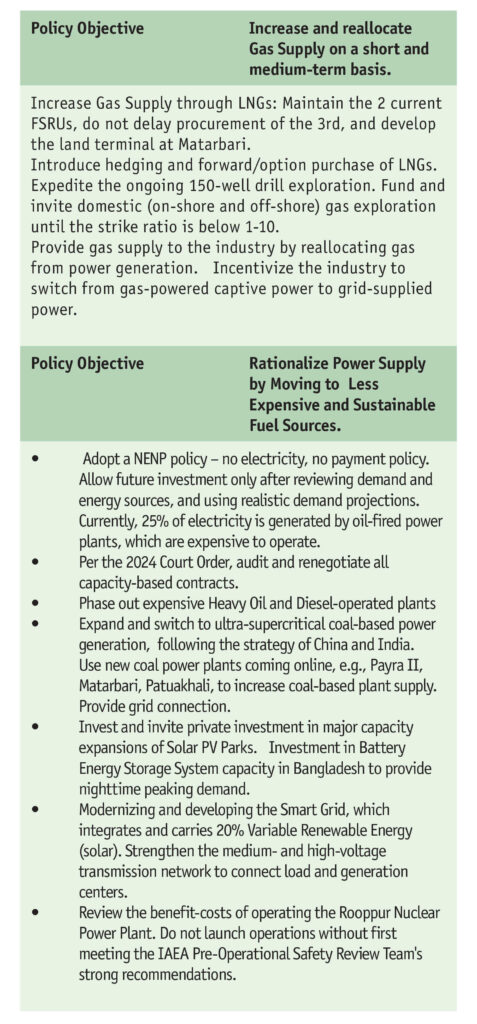
Energy and Power Challenge: Significant gas shortfall, expensive fuel use in power, outdated grid affecting industry and leading to long-term financial losses. A 25-30% daily gas shortfall, affecting both power generation and industry. The present gas supply is also unstable. RMG’s backward linkage and “Double Transformation” textiles are severely affected, with reportedly 10% of plants closing and factories operating at 25-30% utilization. Unplanned overcapacity with expensive fuel, causing huge losses of nearly 1% of GDP (partly financed by a special bond issue).
Policy Steps: Develop a 5-year medium-term investment and financial plan to restore a reliable energy and power supply and achieve economic viability with the following elements.
(C) The Strengthening of the Fiscal Framework
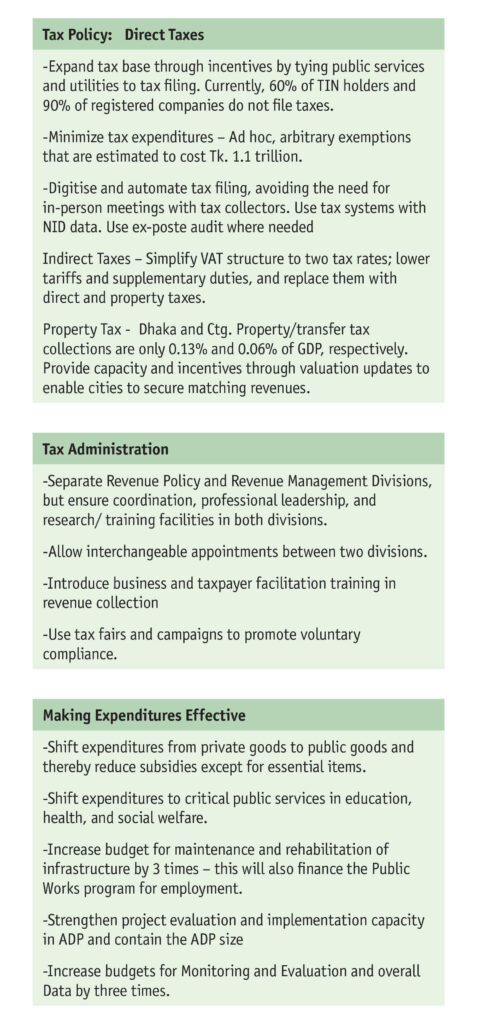
Bangladesh’s weak fiscal position is the Achilles’ heel of the economy. Similar to trade, over the past decade, the revenue-to-GDP ratio has declined from 12% to just over 7%, placing it among the lowest in the world. International data suggests the revenue share should be more than twice as high.
With no fiscal space, per capita public expenditures in real international dollars are one-third those of India and Vietnam. In this context, two policy goals are key. First, revenues must be efficiently raised; second, public expenditures must be well prioritized and effectively implemented.
Much has been written about tax policy and administration reform measures. A Tax Policy body has also set out a rich agenda of reforms. We will highlight only a few here.
(D) Financial Sector
Deepening ongoing financial and banking reforms is another priority. Finance and banking systems are the nerve center of the economy, mobilising savings and domestic resources and allocating them to the most productive enterprises and sectors. At present, private sector credit stock in Bangladesh is only about 36% of GDP, one of the lowest among lower-middle-income countries. Unsurprisingly, 85% of enterprises in the 2024 economic census cite the absence of capital as their most binding constraint.
On the positive side, a robust reform program is underway in the Financial Sector. These include Bangladesh Bank’s Autonomy Ordinance; bank resolution mechanisms; NPL and asset quality reviews and resolution; reconstitution of Bank boards; and a code of conduct for Bank management. Two ordinances on Bank Resolution and Depositor Protection have been passed by the. The main task of the New Government will be to strengthen ongoing reforms by providing personnel, technical, and financial support.
As of February 2026, the proposed Bangladesh Bank Ordinance (Amendment) 2025 aims to significantly increase the central bank’s independence by removing government bureaucrats from the board, granting the Governor ministerial status, and establishing an independent Monetary Policy Committee.
The importance of providing autonomy to the Bangladesh Bank cannot be overstated. Had there been such autonomy over the past decade, most of the ills that have distressed the financial sector could have been avoided. The licensing of an excessive number of banks without proper preparedness, the family dominance and the boards running the Banks, adopting fixed interest rate and exchange rate policies, and last but not least, the massive monetization of the deficit, which has led to the current precarious state of the economy, would have been stopped by an independent Central Bank.
(E) Human Capital Development: Education and Health
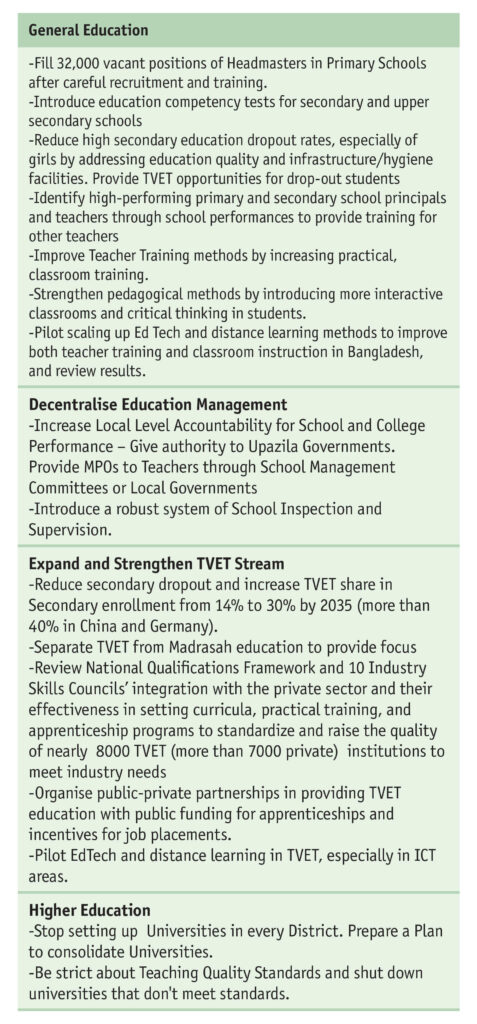
We now turn to the final item on the future agenda: human capital development. Although Bangladesh made significant strides in improving education and health indicators until about a decade ago, the positive trend has since tapered off and, in some cases, reversed. Among serious problems are the high dropout rates, especially among girls in secondary education, and the severe deterioration in educational quality, as measured by learning competency tests. Disturbingly, in health, wasting and underweight prevalence among children, adolescent birth and overall fertility rates have also increased in recent years. Although an essential part of the problem is the extremely meager budgets provided to the sector, an equally important issue is the poor management of resources.
Thus, while resources have been allocated to school and college infrastructure, teacher recruitment and training have been neglected. Nearly a quarter of primary school teachers lack training. The teacher-training curricula lack adequate practical classroom training. Most astounding is that nearly half the country’s government primary schools, some 32,000 schools, are without Head Masters. Research worldwide and in Bangladesh makes it clear that a good headmaster is the principal determinant of a school’s educational outcomes.
Another major issue of resource mismanagement is the monthly payment order for Secondary School teachers’ salaries. Once salaries are paid centrally, the accountability of these teachers to school management committees and the Headmaster virtually disappears. In this backdrop, the falling steps are suggested.
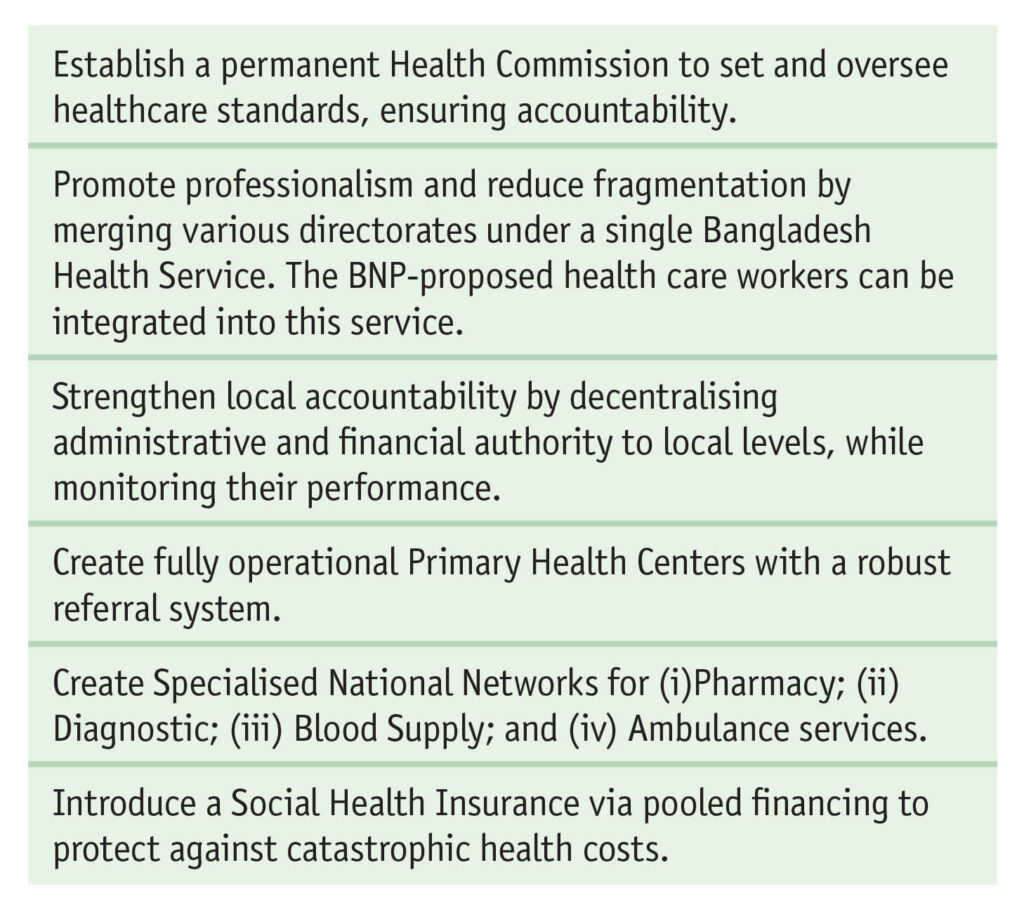
In the health sector, the reform commission has made sensible recommendations. Alongside budgetary increases to WHO levels, their management reform proposals include:
Conclusion: Restoring Order and Confidence and Preparing for Government
In conclusion, we reiterate two critical things. First, law and order must be reestablished and enforced to reinvigorate the economy. The country’s people are exhausted by two years of disorder that threatens their livelihoods. Persuasion and exhortation by political leaders to explain the necessity of discipline can serve as a carrot. But in the event that it is necessary, and sometimes it must be so, force majeure will need to be used.
…we reiterate two critical things. First, law and order must be reestablished and enforced to reinvigorate the economy. The country’s people are exhausted by two years of disorder that threatens their livelihoods. Persuasion and exhortation by political leaders to explain the necessity of discipline can serve as a carrot. But in the event that it is necessary, and sometimes it must be so, force majeure will need to be used.
This point is fundamental. Unless the government can maintain law and order, how can it implement any policy, especially when they are complex and sometimes hurt a particular group while benefiting the vast majority of people? If the government cannot prevent protesting groups from occupying the Shahbag Crossroads and disrupting traffic, the day-to-day work of the people, and the operations of two major hospitals, how can it implement other, much more complex economic and welfare policies?
Second, the government will need to come into office prepared: i.e., with an understanding of the issues it faces and a readiness to bring the best people to address them. Before making decisions, leaders will need to keep an open mind, listen to experts debate differing options and speak truth to power. They will also demonstrate pragmatism in working effectively with the civil service, avoiding politics, promoting merit, and thereby reestablishing trust and raising their capacity and morale.