
Unlimited Access Is Now Yours
Get one full year of exclusive access to Policy Insights magazine and member benefits.
SUBSCRIBE NOW
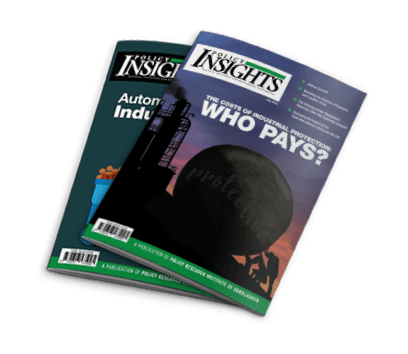
Issue 28
June 2026
As Bangladesh approaches another national budget, the country faces a moment that demands more than routine fiscal adjustments. The challenges confronting the economy are increasingly structural rather than cyclical. Revenue mobilization remains among the lowest in the world relative to the size of the economy, public institutions face growing demands, cities struggle to finance essential services, and the transition to a more competitive and sustainable growth model remains incomplete. Addressing these challenges requires not only resources but also a renewed commitment to policy reform.
For many years, discussions surrounding the national budget have focused primarily on expenditure allocations, tax rates, and annual revenue targets. While these issues remain important, the more fundamental question is whether Bangladesh possesses the institutional and policy framework necessary to support its development ambitions over the coming decades. As the country navigates the post-LDC era, fiscal sustainability, economic competitiveness, energy security, and effective governance will increasingly determine the pace and quality of growth.
This edition of Policy Insights is devoted to that broader reform agenda.
A recurring theme throughout these pages is the need to strengthen domestic resource mobilization. Bangladesh’s persistent revenue shortfall is no longer simply a fiscal concern; it has become a development constraint. Limited revenues restrict the state’s ability to invest in infrastructure, human capital, urban services, climate resilience, and the institutions needed to sustain economic transformation. The challenge is not merely to collect more taxes, but to create a tax system that is fairer, more transparent, less distortionary, and more conducive to economic growth.
At the same time, reform must extend beyond revenue collection itself. The effectiveness of public policy depends on the quality of institutions responsible for implementation. Administrative discretion, regulatory complexity, weak compliance mechanisms, and fragmented governance structures continue to impose significant costs on businesses and citizens alike. Modernization, digitization, transparency, and accountability are no longer optional reforms; they are essential prerequisites for improving both public service delivery and economic competitiveness.
Another theme running through this issue is the growing importance of cities and urban governance. Bangladesh’s urban centers are responsible for a substantial share of national output and will play an even greater role in the country’s future development. Yet many cities remain fiscally constrained and unable to provide the infrastructure and services required by rapidly expanding populations. Building stronger local institutions and sustainable sources of municipal finance will be critical for unlocking urban productivity and improving quality of life.
The issue also examines the country’s energy future at a time when global energy systems are undergoing profound change. Bangladesh must balance the objectives of energy security, affordability, and environmental sustainability while supporting continued industrialization and economic growth. The policy choices made today will shape the country’s competitiveness and resilience for decades to come.
Underlying all these discussions is a simple but important principle: sustainable development is ultimately built on institutions. Strong institutions create the conditions for investment, innovation, compliance, and public trust. Weak institutions raise costs, discourage initiative, and constrain growth. The next phase of Bangladesh’s development will depend as much on the quality of its reforms as on the scale of its ambitions.
As policymakers prepare the national budget, there is an opportunity to move beyond short-term measures and advance a broader agenda of structural reform. The contributions in this issue seek to inform that conversation through evidence, analysis, and practical policy recommendations.
We hope this edition of Policy Insights contributes to a more informed debate on the choices that lie ahead and the reforms that will shape Bangladesh’s economic future.